A 5K start line needs fewer units than a marathon finish festival, but the baseline holds across both: figure one standard unit per 200 to 300 runners, plus at least one ADA unit per cluster under ADA Standards 213.2. Spokane Valley Porta Pros builds the count around your course map, not a guess.
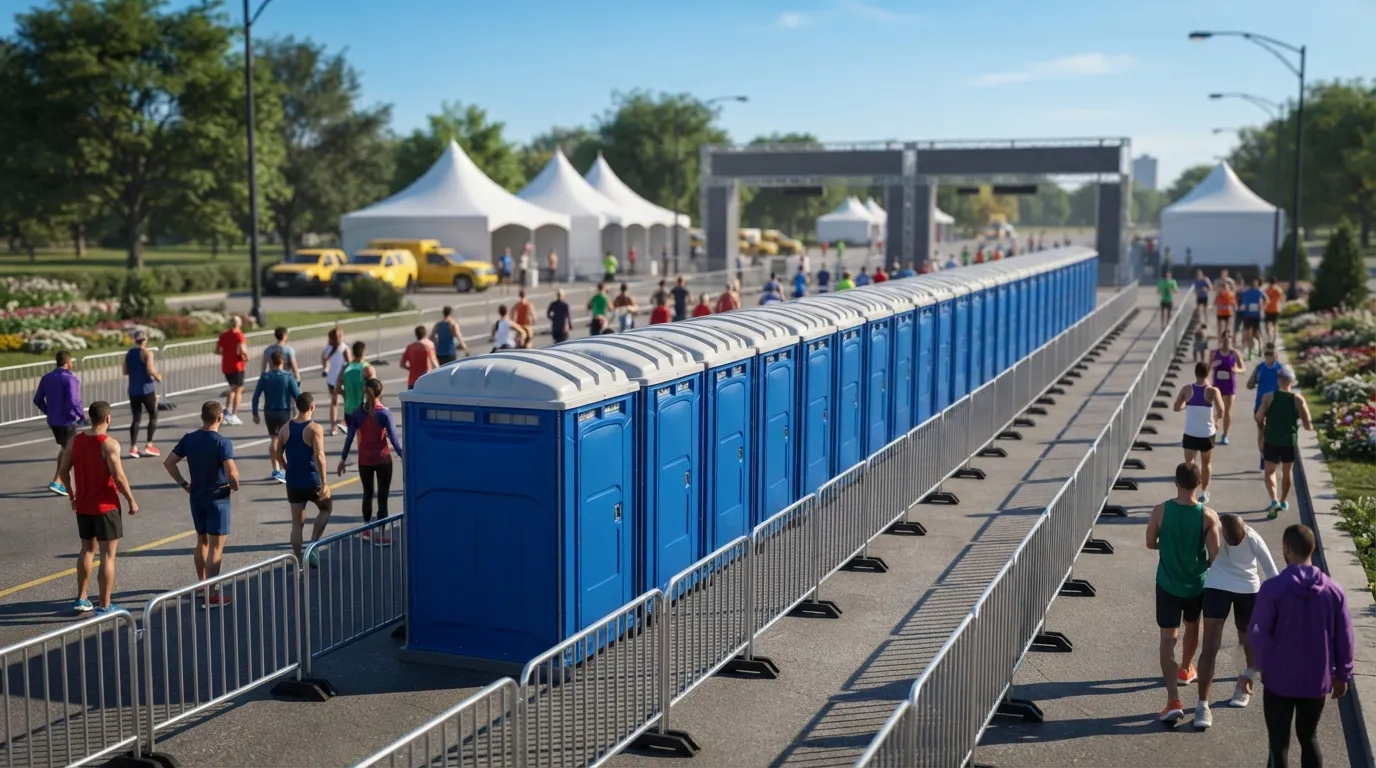
Start with the runner count, then split it across your staging area, mile markers and finish festival. OSHA's construction ratio in 1926.51(c) is written for job sites, not races, but race directors in Spokane Valley use it as a starting benchmark: one toilet for smaller groups, scaling up as headcount climbs. A typical setup for a mid-size race puts most units at the start/finish chute, with two or three satellite clusters along the route for anything over a 10K. Standard units run $100 to $350 a day depending on cluster size and delivery distance, while a single-day rental fits most one-day races cleanly. For larger festivals that stretch across a weekend, the weekend rate on a standard unit typically lands between $125 and $400. If your race draws a crowd that expects more than a bare unit, look at a deluxe flushable option for the VIP or sponsor tent, priced separately from the general field. ADA units need their own line item too: they run $120 to $240 a week or $200 to $400 a day, and ANSI/PSAI Z4.3 sets the baseline service interval most planners use as a reference: one visit per week for 10 users over a 40-hour stretch, which is a reasonable floor for a race day.
Runners handle water bottles, energy gels and shared surfaces at the finish chute, so pair every restroom cluster with a handwashing station. Under 29 CFR 1910.141(d)(2), any hand washing setup needs soap and a way to dry hands; sanitizer alone does not satisfy it, and race organizers in Spokane Valley should plan for that at check-in tables and food zones. If your event runs into early morning or evening hours, a light tower at the staging area covers setup and breakdown once the sun's down. Finish festivals with a beer garden or food trucks often need power beyond what a generator on a cart can handle. A temporary power pole rated for 200 amp service can carry a full vendor row, but it has to be braced properly before load goes on it: guy wires anchored to stakes set well outside the base, checked for plumb before cables run, and kept clear of the runner course and any barricades - that's the short version of how to brace a temporary power pole before load goes on it. OSHA 1926.404(b)(1)(ii) requires GFCI protection on that circuit, which matters more at an outdoor race with wet grass and spilled sports drinks than almost anywhere else you'd run a temporary pole. Course marshals and volunteer stations also benefit from crowd control barrier or chain link temporary fencing to keep spectators off the route near the restroom clusters.
Place them where runners actually stop: the start corral, any aid station past mile 6, and the finish festival grounds. ADA Standards 405.2 caps ramp slope at 1:12, so ADA units need level, firm ground, matching the stable surface requirement in ADA Standards 302.1 - grass fields work if they're dry, gravel lots work better after rain. Keep at least 36 inches of clear path to each unit per ADA Standards 403.5.1, and don't tuck the accessible unit behind a merch tent where a wheelchair can't turn around; that 60 inch turning circle from ADA Standards 304.3.1 needs open ground. For a race that draws from Liberty Lake, 7.0 miles east of Spokane Valley, or Millwood, 4.6 miles northwest, delivery timing matters as much as placement. Roll trucks in the night before if your permit and venue allow overnight staging; it saves a scramble on race morning. See our porta potty placement guide for sightline and odor considerations near the finish photo backdrop. If your race needs a fast add-on unit two days before the gun goes off, our emergency porta potty rental page covers turnaround. For multi-day festival races, check monthly rental terms if setup starts a week early.
Book 3 to 4 weeks out for anything over 500 runners; smaller local 5Ks can often be arranged inside two weeks. Course permits and road closures usually finalize first, and restroom counts follow from the confirmed runner cap once registration numbers firm up.
Not legally required for a race, but smart planning. Put a small cluster near the volunteer check-in table so staff aren't crossing the runner corral. It cuts congestion at the main clusters during peak finish-line traffic.
Yes, both work if the ground is dry and reasonably level. Grass turns to mud fast after rain, so gravel or paved lots are the safer call for ADA units that need a stable surface for wheelchair access.
A 2 stall trailer handles smaller local races well; bigger festivals with beer gardens or vendor rows often need a 4 stall or larger unit to keep lines moving during the finish rush.
Yes. We've serviced routes stretching toward Otis Orchards-East Farms, 10.3 miles northeast, and can quote delivery for courses crossing into neighboring towns; check our service areas page for coverage details.
Yes. Spokane Valley Porta Pros delivers marathon and race restrooms across Spokane Valley and the surrounding metro, with same-day and next-day drop-off available on most orders.
Pricing depends on the unit and how long you need it. See our cost breakdown and request a free quote for an exact figure.
Standard rentals include scheduled service — a pump-out, a clean, a restock and fresh deodorizer. Busy or hot-weather sites can be serviced more often.
Call now or request a free quote — clean units, on-time delivery, transparent pricing.